

Choosing the Right Hydraulic Fitting: Comparison Between JIC, ORFS, BSP, NPT, and DIN Standards
 2025-12-01
Table of Contents
You face significant financial risks when hydraulic fitting selection goes wrong. In the forestry industry, downtime from hydraulic failures can cost up to $1,200 per hour, with annual losses exceeding $170,000 for a single crew. Studies show that improper fitting choices contribute to over 80% of hydraulic failures, threatening both safety and productivity. Selecting the right hydraulic fitting for your application ensures system reliability and reduces costly downtime. Novafit hydraulic fitting solutions help you maintain operational efficiency and protect your bottom line.
How to Choose the Right Hydraulic Fitting Standard for Leak-Free System Performance
- Selecting the right hydraulic fitting standard is crucial for preventing leaks and ensuring system reliability. This choice protects your investment and minimises costly downtime.
- Understanding the differences between fitting types, such as JIC and ORFS, helps you choose the best option for your application. ORFS fittings offer superior leak resistance, especially in high-vibration environments.
- Always verify the thread type and size before installation. Mixing standards such as BSP and NPT can lead to leaks and operational failures, thereby increasing maintenance costs.
- Use proper installation techniques and tools to ensure a secure fit. This practice reduces the risk of leaks and enhances the longevity of your hydraulic system.
- Consulting experts, such as those at NovaFit, can provide valuable guidance on selecting the right fittings. Their support helps you comply with industry standards and optimise system performance.
Why Hydraulic Fitting Standards Matter
Impact on System Performance
You rely on your hydraulic system to deliver consistent performance in demanding environments. The right fitting standard ensures every component works together, reducing the risk of leaks and unplanned downtime. When you select the correct standard, you improve compatibility, optimise energy efficiency, and extend the life of your equipment. The table below highlights how different hydraulic fitting standards influence system efficiency and reliability:
| Impact Area | Description |
|---|---|
| Compatibility | Ensures that components fit together correctly, reducing the likelihood of leaks and failures. |
| Safety | Standards help prevent hazardous spills and mechanical breakdowns by ensuring proper fitting. |
| Performance under Conditions | Sets limits for pressure and temperature, ensuring fittings can withstand operational stresses. |
| Material Specification | Specifies appropriate materials to prevent corrosion and wear, enhancing safety and reliability. |
| Consistent Performance | Guarantees that fittings are made to exact specifications, reducing the risk of unplanned downtimes. |
| Energy Efficiency | Properly matched parts minimise energy wastage and optimise fluid flow, improving overall efficiency. |
| Longevity | Standards lead to the production of more durable parts, reducing maintenance frequency and costs. |
When you compare JIC vs ORFS or evaluate BSP vs NPT threads, you see how each standard addresses specific operational needs. Choosing the right fitting standard is essential for preventing hydraulic leaks and maintaining system integrity.
Risks of Wrong Selection
Selecting the wrong hydraulic fitting standard exposes your operation to significant risks. You may encounter:
- Incorrect thread types can lead to micro-leaks that gradually reduce system pressure.
- Mismatched threads may deform under load, causing permanent damage to fittings and ports.
- In high-pressure situations, these issues can escalate into catastrophic failures, posing significant safety hazards.
You cannot afford to overlook these risks. The cost of downtime, repairs, and lost productivity quickly adds up. By focusing on the correct fitting standard, you protect your investment and ensure your hydraulic system operates safely and efficiently.
Hydraulic Fitting Standards Overview
JIC Fittings
You often choose JIC hydraulic fittings for their 37° flared design, which delivers reliable sealing in high-pressure environments. These fittings use materials like nickel alloys, brass, carbon, and stainless steel, making them suitable for fluid power systems, aerospace, and plumbing. JIC fittings withstand pressures up to 10,000 psi, offering strong leak resistance and vibration handling. You benefit from standardised dimensions, which simplify selection and compatibility. However, improper installation can lead to leaks, especially if the flare is damaged. For B2B operations, JIC fittings reduce downtime and maintenance costs, making them a preferred standard for demanding applications.
ORFS Fittings
ORFS hydraulic fittings feature a flat face and an O-ring, creating a robust seal that excels at preventing hydraulic leaks. You rely on these fittings in high-vibration environments, such as construction and heavy equipment, where leak resistance is critical. The O-ring compensates for minor imperfections, maintaining sealing integrity even under pressure fluctuations. ORFS fittings handle high-pressure systems and minimise the risk of costly failures. When comparing JIC vs ORFS, you notice ORFS offers superior leak prevention, especially in dynamic applications.
BSP Fittings
BSP hydraulic fittings, including BSPT (tapered) and BSPP (parallel), use a 60° cone thread and are common in the UK and international markets. You find BSP fittings versatile, supporting both metal-to-metal and O-ring sealing methods. However, mismatching BSP with NPT threads can cause leaks and system failures. BSP fittings handle moderate to high pressures, but you must ensure correct thread engagement to avoid downtime. BSP vs NPT threads remain a frequent source of confusion, so careful identification is essential for preventing hydraulic leaks.
NPT Fittings
NPT hydraulic fittings use a 60° thread angle and rely on thread deformation plus sealant for sealing. You see NPT as the U.S. standard, widely used for fluid and gas transfer. These fittings excel in pressure handling but require proper installation and sealant to prevent leaks. Mixing NPT with BSP threads can result in poor sealing and expensive repairs. You must verify thread type to maintain system integrity and avoid operational risks.
DIN Fittings
DIN hydraulic fittings follow strict German and European standards, using a 24° cone and metric threads. You benefit from their robust construction and precision engineering, which ensure compliance with ISO and European safety requirements. DIN fittings support both light and heavy-duty applications, offering reliable performance in high-pressure systems. Using DIN fittings helps you reduce maintenance costs and improve compatibility across international operations.
Tip: Always verify the hydraulic fitting standard before installation. This step is crucial for preventing hydraulic leaks and avoiding costly downtime.
JIC vs ORFS Comparison
Leak Resistance
When you compare JIC vs ORFS, you see a clear difference in leak resistance. JIC fittings use a 37° flare to create a metal-to-metal seal. This design works well in many hydraulic systems, but it can become vulnerable if the flare surface gets scratched or if you over-tighten the connection. In contrast, ORFS fittings use an O-ring compressed against a flat face. This approach delivers a superior seal, even if the hydraulic system experiences minor imperfections or misalignment. The O-ring design excels at preventing hydraulic leaks, especially in high-pressure or high-vibration environments. If you choose the wrong standard, you risk micro-leaks that can lead to pressure loss and expensive downtime.
| Feature | ORFS Fittings |
|---|---|
| Leak Resistance | High due to the O-ring and flat face design |
| Vibration Tolerance | Maintains seal integrity under significant vibrations |
| Primary Sealing Mechanism | O-ring compresses against a flat face for a tight seal |
Vibration Handling
You often operate hydraulic equipment in environments with constant movement and vibration. JIC fittings provide good vibration resistance, but repeated stress can cause the flare to deform, leading to leaks over time. ORFS fittings, designed to SAE and ISO standards, maintain seal integrity under significant vibration. The O-ring absorbs movement and keeps the connection tight. This feature reduces the risk of unplanned maintenance and helps you avoid costly shutdowns. When you select the correct standard, you improve system reliability and reduce the risk of hydraulic failures.
Pressure Ratings
Pressure ratings play a critical role in your hydraulic system’s safety and performance. JIC fittings, built to SAE J514 standard, typically handle pressures up to 10,000 psi in smaller sizes, but performance drops in larger diameters. ORFS fittings, compliant with ISO 8434-3 and SAE standards, are designed for high-pressure applications. You can use ORFS fittings in systems up to 6,000 psi for most sizes, with some specialised fittings rated even higher.
- ORFS fittings are designed for high-pressure hydraulic systems.
- They can handle applications up to 6,000 PSI.
- The standard for these fittings is specified by ISO 8434-3.
| Fitting Size | Maximum Pressure Rating |
|---|---|
| 1/4 inch | 6000 psi |
| 1 inch | 3000 psi |
| Specialized | Up to 10,000 psi or more |
Note: Selecting the wrong hydraulic fitting standard can result in catastrophic failures, lost productivity, and increased costs. Always verify your system’s SAE and ISO requirements to ensure you choose the right fitting for your application.
BSP vs NPT Threads
Thread Differences
You encounter BSP and NPT hydraulic fittings in many industrial systems. Both standards serve similar purposes, but their thread specifications differ significantly. BSP threads follow the BSP thread standards, using a 55° angle with rounded peaks and valleys. NPT threads, defined by SAE and ISO, use a 60° angle with flattened peaks and valleys. This difference affects how each fitting seals under pressure. BSP threads can be either parallel or tapered, while NPT threads are always tapered. The taper in NPT threads helps create a tight seal as you tighten the fitting, which is critical for preventing hydraulic leaks in high-pressure applications.
Identification Tips
You can quickly identify BSP vs NPT threads by following a few practical steps:
- Clean both male and female hydraulic components before inspection. Dirt or debris can hide thread details and compromise the seal.
- Use a thread pitch gauge to measure the angle. BSP threads show a 55° angle, while NPT threads show a 60° angle.
- Visually inspect the fitting. Tapered threads narrow toward the end, while parallel threads maintain a consistent diameter.
- Use callipers to measure the diameter at different points. A consistent diameter indicates a parallel BSP fitting, while a taper indicates NPT or BSPT.
- Always check for the correct SAE or ISO marking on the fitting to confirm the standard.
Tip: Applying an appropriate thread sealant, such as Teflon tape, to NPT threads can further reduce the risk of leaks.
Compatibility Issues
Mixing BSP and NPT hydraulic fittings creates serious compatibility issues. The differences in thread angle and shape mean the fittings do not seat properly, leading to leaks and system failures. You risk operational integrity and increased maintenance costs when you combine these standards. The table below summarises the main problems:
| Issue Type | Description |
|---|---|
| Leakage | Mismatched fittings are prone to leakage, causing fluid loss and reducing system efficiency. |
| Operational Integrity | Improperly sealed fittings lead to downtime and increased maintenance costs due to leak rectification. |
| System Reliability | Compatibility issues undermine the reliability of the hydraulic system, affecting performance. |
You must always verify the standard before installation. Choosing the wrong fitting can result in expensive downtime and lost productivity. By understanding BSP vs NPT threads, you take a critical step toward preventing hydraulic leaks and ensuring your hydraulic system meets SAE and ISO requirements.
DIN Hydraulic Fitting Applications
European Standards
You encounter DIN hydraulic fittings in systems that demand strict adherence to European engineering practices. The DIN standard sets precise requirements for thread geometry, sealing surfaces, and pressure ratings. You see these standards referenced in technical documentation, especially when working with international partners. DIN hydraulic fittings comply with both ISO and SAE specifications, which ensures compatibility across borders. You benefit from the robust design and high-quality materials specified by DIN, which help you meet safety and reliability targets. The DIN standard supports both light-duty and heavy-duty hydraulic applications, making it a preferred choice for many European manufacturers. You often find DIN fittings paired with ISO-certified components, which streamlines procurement and maintenance.
Note: Choosing the correct DIN hydraulic fitting standard reduces the risk of system failures and helps you comply with ISO and SAE regulations. This step is essential for preventing hydraulic leaks and minimizing downtime.
Industry Use Cases
You rely on DIN hydraulic fittings in a wide range of industries. These fittings deliver consistent performance in environments where reliability and safety matter most. You see DIN standard fittings specified in sectors that require high-pressure and vibration-resistant connections. The following industries commonly use DIN hydraulic fittings:
- Construction
- Agriculture
- Mobile Equipment
- Mining
- Forestry
- Marine
You select DIN hydraulic fittings for mobile equipment because they withstand constant movement and pressure fluctuations. In mining and forestry, you need fittings that resist corrosion and maintain seal integrity under harsh conditions. Marine applications demand fittings that comply with both ISO and SAE standards to ensure safety and prevent leaks. You notice that European manufacturers prefer DIN standard fittings for their compatibility and ease of maintenance. When you compare JIC vs ORFS or evaluate BSP vs NPT threads, you recognise that DIN hydraulic fittings offer a reliable alternative for preventing hydraulic leaks in complex systems.
Tip: Always verify the DIN standard and ISO certification before installation. This practice helps you avoid costly downtime and ensures your hydraulic system meets international requirements.
Hydraulic Fitting Comparison Table
Leak Resistance
You need to prevent hydraulic leaks to avoid costly downtime and safety hazards. Leak resistance depends on the sealing method and the ability to maintain integrity under pressure. JIC fittings use a metal-to-metal seal, which works well if you install them correctly and avoid surface damage. ORFS fittings use an O-ring and flat face, which provides superior leak resistance, especially in high-pressure or high-vibration environments. BSP fittings offer moderate leak resistance, but you must ensure proper thread engagement and avoid mixing with NPT threads. NPT fittings rely on thread deformation and sealant, which can lead to leaks if you do not apply enough torque or sealant. DIN fittings use a 24° cone and metric threads, delivering reliable leak resistance in both light and heavy-duty hydraulic systems.
If you want to minimize the risk of leaks, always verify the standard and sealing method before installation. This step is essential for preventing hydraulic leaks and maintaining system reliability.
Vibration Handling
Vibration can cause fittings to loosen or seals to fail, leading to leaks and unplanned maintenance. JIC fittings handle vibration well due to their robust flare design, but repeated stress can deform the sealing surface. ORFS fittings excel in high-vibration environments because the O-ring absorbs movement and maintains a tight seal. BSP fittings provide moderate vibration resistance, but you must avoid mixing BSP vs NPT threads to prevent leaks. NPT fittings can loosen under vibration, especially if you do not use proper installation techniques. DIN fittings offer strong vibration resistance, making them suitable for mobile equipment and heavy machinery.
Tip: For high-vibration applications, consider ORFS or DIN fittings to reduce the risk of leaks and downtime.
Pressure Ratings
You must match the pressure rating of your hydraulic fitting to your system requirements. JIC fittings, made from carbon steel or stainless steel, handle pressures from 6,000 to 10,000 psi. ORFS fittings support high-pressure applications, typically up to 6,000 psi, with some specialised designs reaching higher ratings. BSP fittings handle moderate to high pressures, but you must check the specific rating for your application. NPT fittings, when made from carbon steel or stainless steel, can handle up to 10,000 psi, but performance depends on proper installation and sealant use. DIN fittings, built to ISO and SAE standards, support a wide range of pressures, making them suitable for both light and heavy-duty hydraulic systems.
Always consult SAE and ISO specifications to ensure your fitting meets the required pressure rating. Incorrect selection can lead to catastrophic failures and expensive repairs.
Typical Applications
You find JIC fittings in high-pressure hydraulic systems, aerospace, and fluid power applications. ORFS fittings are common in construction, agriculture, and heavy equipment, where leak-free performance is critical. BSP fittings appear in international markets, especially in the UK, for general hydraulic and pneumatic systems. NPT fittings are the standard in North America for fluid and gas transfer. DIN fittings dominate European markets and are used in construction, mining, marine, and mobile equipment.
When you compare JIC vs ORFS or evaluate BSP vs NPT threads, you see that each standard serves specific industries and operational needs. Selecting the right fitting helps you avoid downtime and maintain system efficiency.
Summary Table
Below is a concise, SEO-friendly comparison table to help you select the right hydraulic fitting standard for your application:
| Standard | Leak Resistance | Vibration Handling | Pressure Ratings (PSI) | Typical Applications |
|---|---|---|---|---|
| JIC | Good (metal-to-metal seal) | Good, but the flare can deform | 6,000 – 10,000 (carbon steel) | High-pressure hydraulic, aerospace, fluid power |
| ORFS | Excellent (O-ring seal) | Excellent, absorbs vibration | Up to 6,000 (standard), higher for specialised | Construction, agriculture, heavy equipment |
| BSP | Moderate (thread + cone/O-ring) | Moderate, depends on installation | 3,000 – 6,000 (varies by material) | UK/international hydraulic, pneumatic systems |
| NPT | Moderate (thread deformation + sealant) | Fair, can loosen under vibration | Up to 10,000 (carbon steel) | North American fluid/gas transfer, general hydraulic |
| DIN | Excellent (24° cone/metric) | Excellent, robust under vibration | 6,000 – 10,000 (carbon steel) | European construction, mining, marine, and mobile equipment |
Use this table as a quick reference for preventing hydraulic leaks and minimizing operational risks. Always verify SAE and ISO requirements before making your final selection.
Identifying Hydraulic Fittings
Visual Inspection
You can quickly identify most hydraulic fittings in the field by using visual inspection techniques. Start by examining the thread type. Tapered threads gradually decrease in diameter, while straight threads maintain a consistent diameter along their length. This distinction helps you separate standards like NPT and BSPT from BSPP and metric threads. The table below summarises these differences:
| Thread Type | Description | Examples |
|---|---|---|
| Tapered Threads | Gradually decrease in diameter along their length. | NPT, BSPT |
| Straight Threads | Maintain a consistent diameter along their length. | BSPP, Metric Threads |
You should also look for markings or stamps on the fitting body. These often indicate the standard or manufacturer, which helps you avoid costly mix-ups. In high-pressure environments, a wrong identification can lead to leaks, downtime, and expensive repairs. Visual inspection remains your first line of defence for preventing hydraulic leaks and ensuring system compatibility.
Measurement Tools
You need precise tools to confirm the fitting type and size. Callipers measure the outer and inner diameters of threads, while a thread gauge checks the spacing between threads. These tools help you distinguish between standards such as BSP vs NPT threads, which often look similar but perform differently under pressure. The table below outlines the main tools and their functions:
| Tool | Function |
|---|---|
| Thread gauge | Measures thread-to-thread spacing for accurate pitch detection. |
| Calipers | Measures outer and inner diameters of fitting threads. |
To use callipers effectively, follow these steps:
- Position the callipers on the threads.
- Read the measurement displayed on the calliper.
- Repeat the measurement at different points for accuracy.
You reduce the risk of operational failures by using these tools. Accurate identification supports your efforts in preventing hydraulic leaks and costly downtime. In B2B operations, this process protects your investment and keeps your system running efficiently.
Preventing Hydraulic Leaks and Downtime
Risks of Mixing Standards
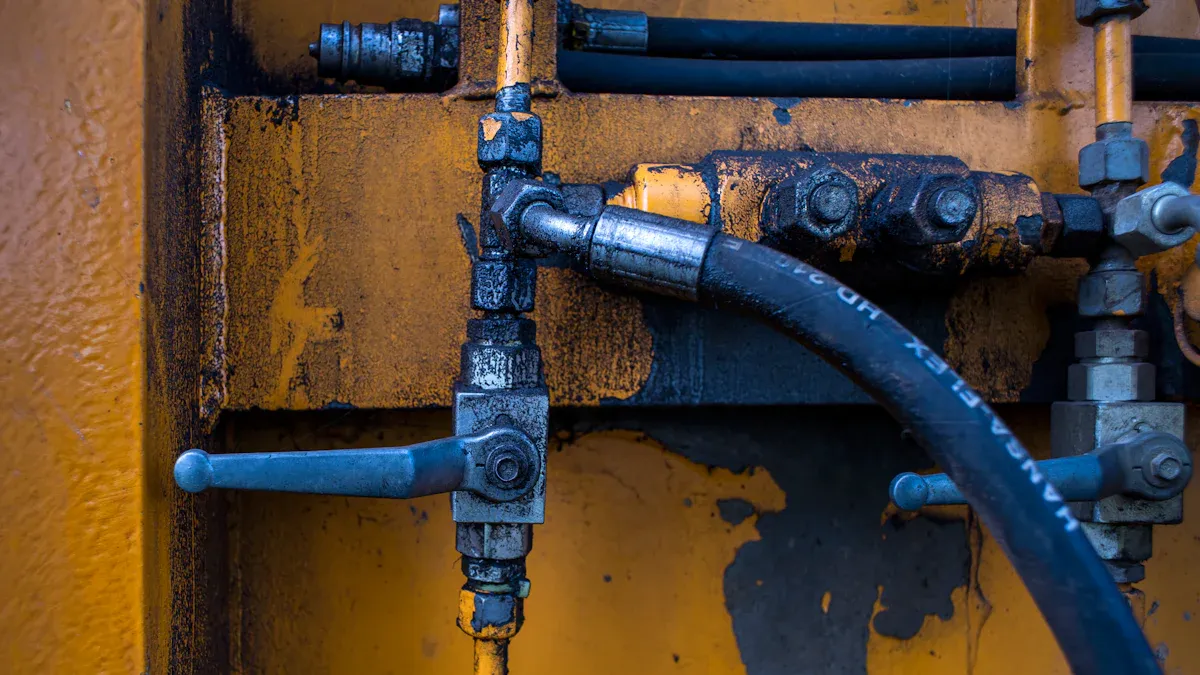
Mixing different standards in your hydraulic system creates serious risks for your operation. When you combine incompatible fittings, you increase the chance of leaks, hose bursts, and costly downtime. Over 30% of hose failures result from mismatched fittings or improper specifications. Hose bursts can cause up to 47% of unscheduled downtime, with costs ranging from $700 to $3,500 per hour in North America. In Europe, non-compliance with safety regulations can push repair costs above €12,000 per incident. You also face higher liability and safety risks when you mix components from different manufacturers. Incompatible parts can lead to dangerous failures, including leaks and bursts, which threaten both equipment and personnel. Proper matching of hose and fittings is essential for preventing hydraulic leaks and ensuring long-lasting assemblies. When you compare JIC vs ORFS or evaluate BSP vs NPT threads, you see that using the correct standard is critical for system reliability.
| Cause | Explanation |
|---|---|
| Improper installation | Incorrect alignment or tightening can create gaps for fluid to escape. |
| Incorrect torque settings | Failing to apply the correct torque can lead to poor-fitting installations, causing leaks. |
| Misalignment | Incorrect assembly can lead to excessive stress and eventual failure of hydraulic components. |
| Lack of training | Inadequate training in installation and maintenance can result in improper fitting selection. |
Tip: Always train your team on proper installation techniques and standard identification. This step reduces the risk of leaks and downtime.
Adapter Solutions
When you need to connect incompatible standards, adapter solutions offer a temporary fix. You can use adapters to bridge differences in thread type, pressure rating, material, or sealing method. However, adapters come with limitations. Thread compatibility issues may cause leaks or pressure drops, especially when connecting NPT to BSPP. Using a fitting with a lower pressure rating can result in catastrophic failures. Material incompatibility, such as mixing steel with aluminium, can lead to corrosion and weaken the connection. Seal and angle discrepancies, like combining JIC with BSPP, often result in inadequate sealing.
| Compatibility Issue | Description | Limitations |
|---|---|---|
| Thread Compatibility | Involves different thread types that may not seal properly. | Can lead to leaks and pressure drops if mismatched (e.g., NPT vs. BSPP). |
| Pressure Rating Mismatches | Fittings must withstand specific pressure levels. | Using a fitting with a lower pressure rating can cause leaks or catastrophic failures. |
| Material Incompatibility | Different materials can lead to galvanic corrosion. | Using incompatible materials (e.g., steel with aluminium) can weaken fittings and cause leaks. |
| Seal and Angle Discrepancies | Different sealing methods and angles can cause leaks. | Mixing fittings with different sealing methods (e.g., JIC vs. BSPP) can result in inadequate sealing. |
Note: Adapters should only serve as a short-term solution. For long-term reliability, always standardize your hydraulic fittings and follow best practices for preventing hydraulic leaks.
Selecting the Right Hydraulic Fitting for Your Application
Assessing Requirements
You must start by evaluating your application’s specific needs before selecting any hydraulic fitting. The wrong choice can lead to expensive downtime, safety hazards, and lost productivity. You need to consider several critical factors to ensure your system operates reliably and meets industry standards such as SAE and ISO.
Follow this step-by-step process to select the correct fitting for your application:
- Determine the System Requirements
Identify the maximum operating pressure and temperature for your hydraulic system. Consider the type of fluid used, as some fluids require special materials or seals to prevent leaks and corrosion. - Check the Thread Type
Measure the thread pitch and diameter. Confirm whether your system uses BSP, NPT, or metric threads. Accurate identification helps you avoid compatibility issues and supports preventing hydraulic leaks. - Measure the Fitting Size
Match the fitting size to the hose, pipe, or tube diameter. Double-check the thread pitch to ensure a secure connection. Incorrect sizing can result in leaks or system failures. - Use Technical Drawings and Diagrams
Refer to technical drawings for detailed specifications. These documents help you verify that the selected fitting meets SAE and ISO requirements for your application.
Tip: Always document your selection process. This practice reduces errors and supports compliance with industry standards.
Checking Compatibility
You must verify compatibility between all components in your hydraulic system. Mixing standards such as BSP vs NPT threads can cause leaks, pressure drops, and costly repairs. You need to check both the thread type and sealing method to ensure a reliable connection.
- Inspect each fitting for markings that indicate the standard, such as SAE, ISO, or DIN.
- Use callipers and thread gauges to measure thread pitch and diameter. This step helps you distinguish between BSP, NPT, and metric threads.
- Confirm that the material of the fitting matches the requirements of your application. For example, stainless steel resists corrosion in marine environments, while carbon steel suits high-pressure systems.
- Review technical documentation to ensure all components meet the pressure and temperature ratings for your application.
You must avoid mixing JIC vs ORFS fittings unless you use approved adapters. Even then, adapters should serve only as a temporary solution. Standardising your hydraulic fittings across the system helps you minimise downtime and prevent hydraulic leaks.
Note: Incompatible fittings increase the risk of leaks and operational failures. Always verify compatibility before installation.
Consulting NovaFit Hydraulic Fitting Experts
You gain significant advantages when you consult Novafit hydraulic fitting experts for complex or custom applications. NovaFit hydraulic fitting specialists provide technical support, certified products, and documented test reports. You benefit from consistent quality and reduced downtime, which protects your bottom line.
| Benefit | Description |
|---|---|
| Consistent Quality | Certified products and documented test reports ensure reliability for every application. |
| Expert Support | Assistance from trusted brands like NovaFit hydraulic fittings enhances safety and operational efficiency. |
| Minimised Downtime and Costs | Choosing reliable partners such as NovaFit hydraulic fittings reduces service costs and downtime for projects. |
You should reach out to NovaFit hydraulic fitting experts when you face unique system requirements, high-pressure applications, or need custom solutions. NovaFit hydraulic fitting offers OEM and custom fitting services tailored to your specifications. You receive guidance on selecting the right BSP, NPT, or metric fitting for your application, ensuring compliance with SAE and ISO standards.
🚀 Ready to optimize your hydraulic system?
Contact NovaFit hydraulic fitting experts for OEM and custom fitting solutions. You will receive technical guidance, certified products, and support for preventing hydraulic leaks and minimizing downtime.
You protect safety and maximise performance when you select the correct hydraulic fitting standard. You avoid costly downtime by following best practices for identification and compatibility, especially with BSP and NPT threads. You reduce risk by consulting SAE guidelines and using the comparison table for quick reference. You address B2B pain points by preventing hydraulic leaks and understanding JIC vs ORFS differences. You improve safety and reliability when you choose NovaFit’s OEM/custom fitting services. Reach out for expert guidance and ensure your hydraulic system meets every standard.
FAQ
What is the main difference between JIC vs ORFS fittings?
You see the main difference in the sealing method. JIC uses a 37° metal flare, while ORFS uses an O-ring face seal. ORFS offers better leak prevention, especially in high-vibration environments.
How do I identify BSP vs NPT threads in my system?
You check the thread angle and shape. BSP threads have a 55° angle and rounded peaks. NPT threads use a 60° angle with flat peaks. Use a thread gauge for accurate identification and avoid costly compatibility issues.
Why is preventing hydraulic leaks so important for my business?
You avoid expensive downtime, safety hazards, and equipment damage by preventing hydraulic leaks. Leaks can lead to lost productivity and higher maintenance costs, especially in high-pressure hydraulic systems.
Can I mix different fitting standards using adapters?
You can use adapters for temporary connections, but this increases the risk of leaks and pressure drops. For long-term reliability, always standardise your fittings and avoid mixing standards.
What should I consider when selecting a hydraulic fitting for my application?
You must check system pressure, thread type, material compatibility, and industry standards. Proper selection helps you avoid operational risks and supports efficient, leak-free performance.